

Lace, history and Role in Lingerie
The long history of lace has played a role in our modern lace lingerie.
Fun fact about lace. The origin from a Latin word means “noose”. A noose describes an open space outlined with rope or thread.
The Origins of Lace in History
Many historians strongly dispute the origins of lace and lace-making. This therefore, makes it truly impossible to know exactly when and where lace-making began. So this is what we do know.
An Italian claim is a will from 1493 by the Milanese Sforza family.
A Flemish claim is in a painting from around 1485 by Hans Memling.
The making of lace evolved from other techniques, making it impossible to say that it originated in any one place. The fragility of lace means that few exceedingly old specimens are in existence today.
Bobbin and Needle Lace: history and Role in Lingerie
One variety of lace, made with a single needle and thread, is called needle lace. Bobbin lace entails the plaiting of many threads.
Both varieties were made in Italy in the 1400s. We know this for sure, because documenting lace in Italy in the 15th century is a list of fine laces from the inventory of Beatrice d’Este, Duchess of Milan, from 1493.
In Venice, lace-making was originally a pastime of mostly noblewomen.
Brussels were making Lace in the 1400s. Samples of such lace have survived! Belgium and Flanders were also major centres for the creation of primary bobbin lace starting in the 1500s. You will still find it produced there today.
According to the history books, lace arrived in France with Catherine de Medici. Newly married at the time to King Henry II in 1533. She brought Venetian lace-makers with her to France.
The French Royal Court, from popularised fashions, influenced the lace. It was so delicate and graceful, compared to the heavier needle or point laces of Venice. Examples of French lace are: Alencon, Argentan and Chantilly.
Lace became high fashion from the early 17th century onwards. Marie Antoinette influenced the popularity of lace. She loved everything luxurious and extravagant.
Lace, worn as a status symbol
Lace was originally made from silk and linen, while some textile artisans even made fabric using gold or silver thread. Cotton thread and synthetic fibres are both used in lace-making today.
Lace is a luxury textile. Traditionally and today, it takes a lot of time and expertise to make.
Lace-making is a time-consuming process, requiring skill and dedication. The results are worth it!

Lace popularity
Lacework was used extensively throughout the Renaissance. In the 17th century, France became the first world power in fashion where lace was used in many designs.
France has become the most diligent and versatile lace manufacturer. There is a beautiful constellation of lace weavers in France that the top fashion designers turn to.
The most expensive lace is Leavers Lace. Only a few manufacturers of the type of lace remain in Northern France. The machinery has changed little since its creation by Englishman John Leavers, in Nottingham, England, in 1831.
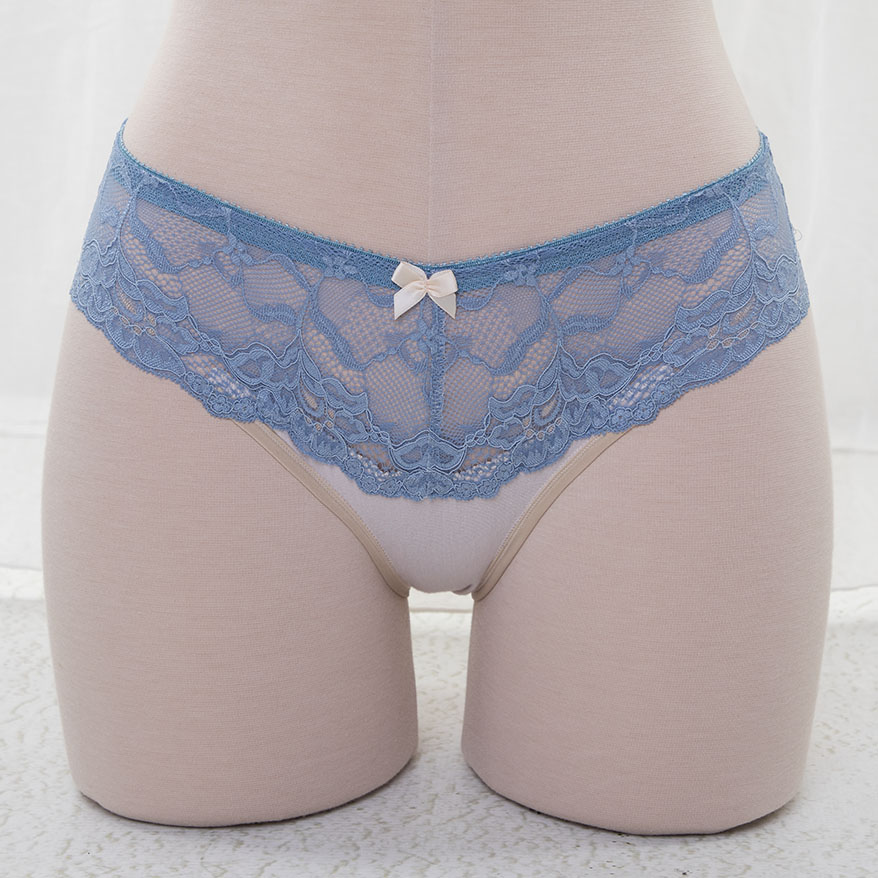
The Softest Lace and Its Role in Modern Lingerie
The lace that is ideal for some lingerie designs is elastic because it is very soft and should never be scratchy.
We have Lady Duff-Gordon to thank for starting the 20th-century evolution of Lingerie ( French translation of undergarments).
Lady Duff-Gordon pioneered the usage of soft fabrics that mirrored the feel of idealised flesh, deliberately appealing to the sense of touch. The “mannequin parade” was a precursor to the modern fashion show; she originated this! She was key to popularising less restrictive corsets. She promoted alluring and pared-down lingerie. Lady Duff-Gordon survived the sinking of the Titanic. What a woman!
Lady Duff-Gordon paved the way for other high-fashion design concepts. Redefining lingerie as a luxury item with a strong appeal to the fashion-oriented consumer.
Ada Masotti, the founder of La Perla in 1954, embodies the luxury of lace lingerie in her legendary silk and lace slips. She is a pioneer in luxury lingerie.

How to care for lace garments
Follow the care instructions after checking them thoroughly for content and specific care details.
Make sure not to wring the lace. You risk distorting the fibres.
Lay flat to dry, away from direct sunlight.